W VISION
Before YouTube and Netflix, even in the era of slow 28.8 kbps dial-up, there were attempts to broadcast video on the Internet for users to watch on demand.

One of them was a small Japanese site called W VISION.
I understood the name first as “double U vision,” but their about page clearly stated it was pronounced “double vision.” The “W” is often said as “double” in Japanese, as they use that letter to mean that, getting that word from shortening “double U.” Like if you find a large bag of chips in a convenience store, they may slap a large “W” on it to say you get double the junk food if you buy it.
W VISION ran for a short time, from 1996 until at least 1999. Looking back at it today, it felt more like an experiment. It was bold for its time when the only video content you could get was crunched down to a blocky 160×120-pixel image at around 5 to 9 fps. But hey, it was new, so companies and users wanted to see what it could do.
I’m not sure how the vision is “doubled” here, but the W may also have stood for one of the corporate names that started the project, Watanabe. Watanabe Productions was responsible for providing video content for the site as well as actors and performers for its programmes. They joined with the Impress Group to build and run the website. Both corporate families still exist today, though under reorganised structures and names.

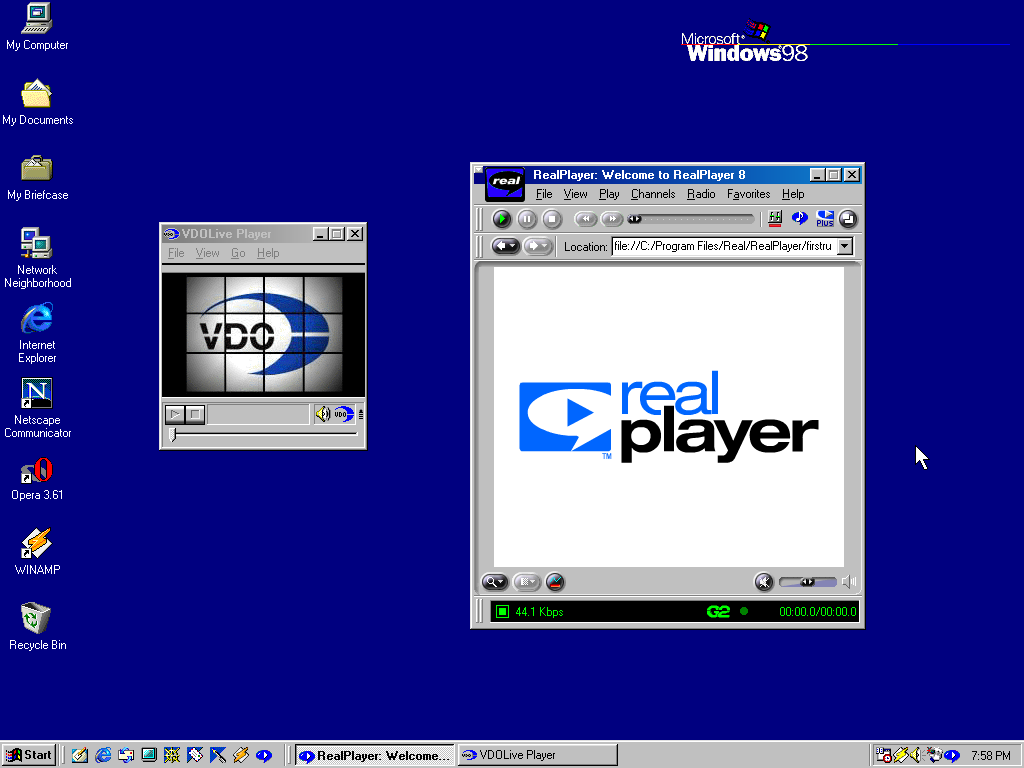
The site was minimal, but required you to install a few plug-ins. Browsers were skimpy on features back then, so it was common for sites to require separate plug-ins that would play the videos or show special multimedia content, either in their own app or embedded on the webpage. The required software was two video players, RealPlayer and VDOPlayer Live, as well as Flash, which couldn’t handle video on its own at that time. Those plug-ins died, but they greatly contributed to the Web we use today.
I forgot who told me about the site first. Maybe it was the anime chatroom which I was visiting daily back then, or that American guy I used to talk to via ICQ, fluent in Japanese and living with a Japanese illustrator, both loving anime… Sir, wherever you are, thank you for putting up with me all this time talking about Evangelion.
I remember the site mostly ran in a small pop-up window divided into a bunch of frames, showing an interface in blacks and dark blue that may look dated today but was calming to the eye, making way for the video content.
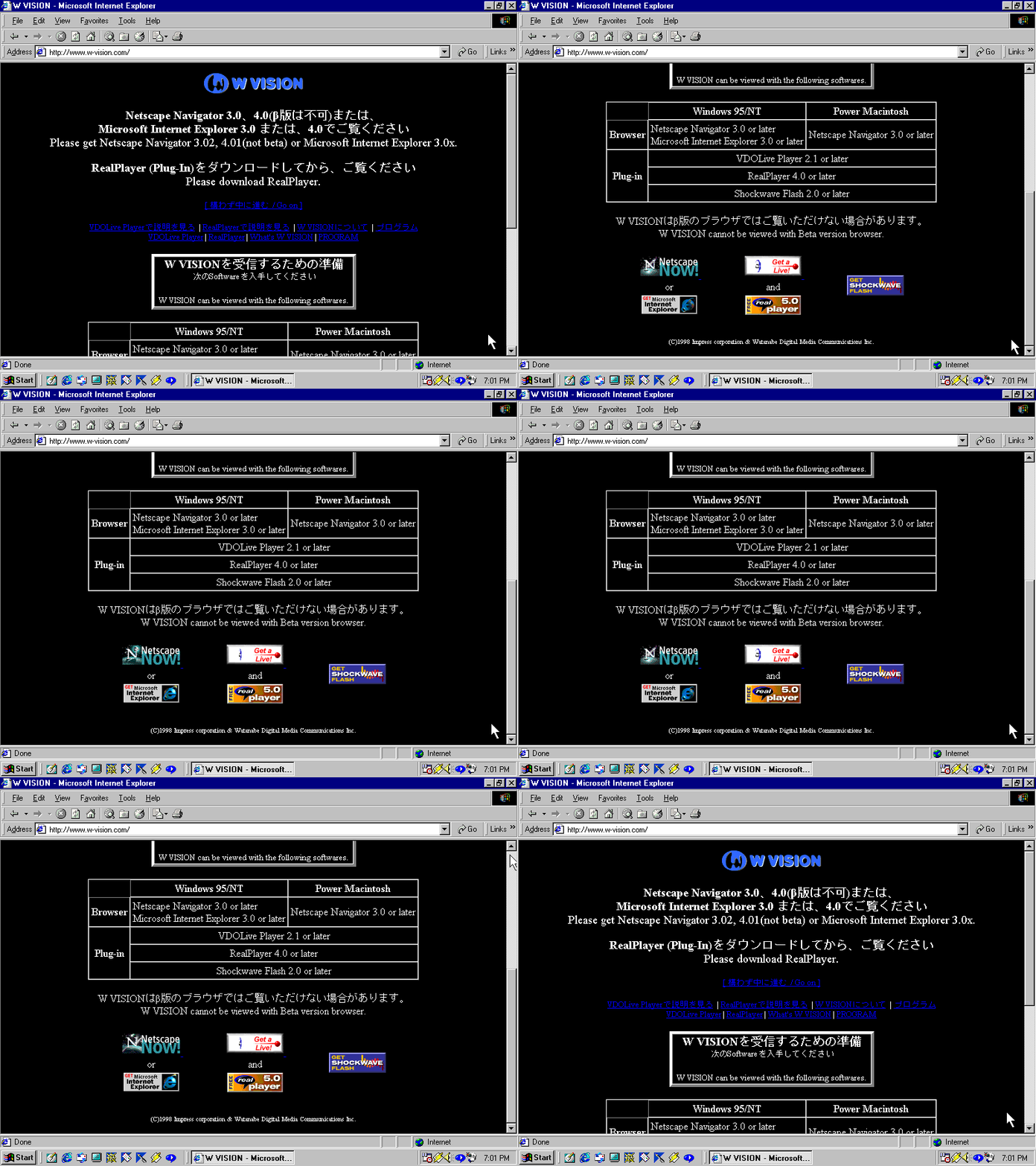
You didn’t even need to log on. The site was supported by ad banners and no subscription was required. All you had to do was to visit the site, then pick a channel to watch.
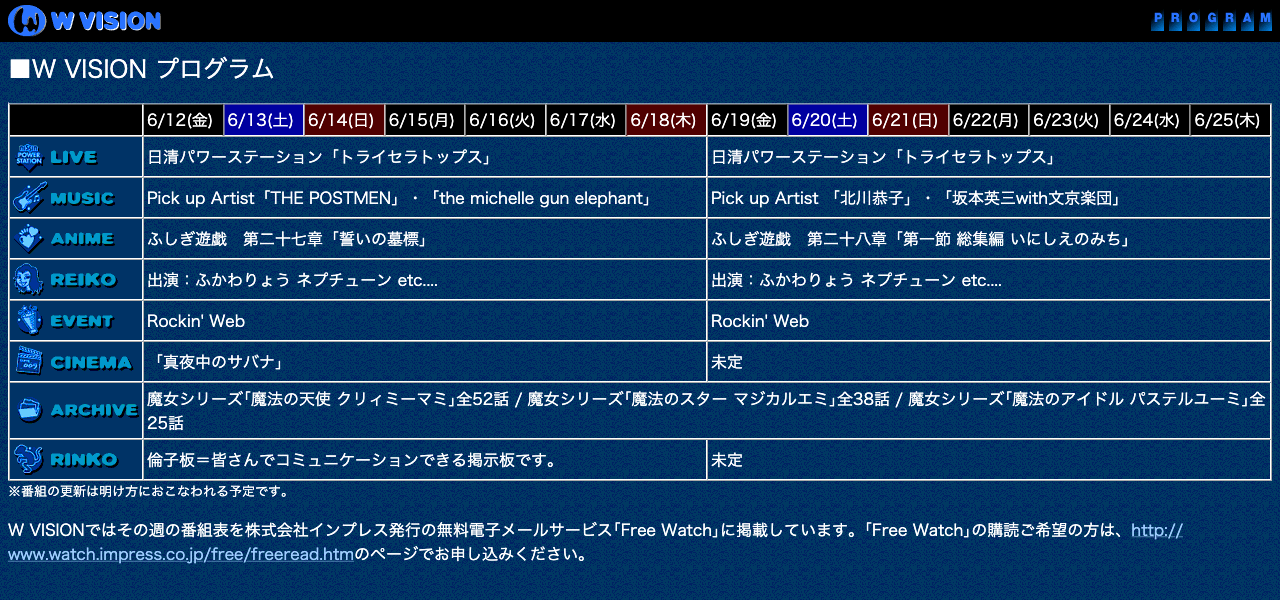
Every week, the programming grid was published on the site with the shows to be “broadcast” in the next two weeks, and sent by email through their newsletter. There were channels such as Anime and Music, and even a Live channel, though “live” seems to have meant recorded live performances more than real-time streaming. The Cinema channel featured some American films. An Archive channel showed older TV programmes and anime from the 1980s. These channels were not live in the broadcast sense. They were closer to weekly on-demand slots, with the same programme listed for each channel across the whole week.
The programme grid also listed a community bulletin board “channel,” but I never saw that. I bet my Japanese wouldn’t have been good enough at the time to even understand what was going in it anyway.
Also, there was no location restriction! The site was in Japan, yet people from anywhere in the world could connect to it without a problem. There was no need for a VPN, and that let tons of people curious about Japan have a taste of their programming, even if they couldn’t understand the language.
Studio Pierrot was one of the site’s content providers, supplying anime from its catalogue. Otaku everywhere were jumping at the chance to watch some anime for free. Even with the slow connections and the language barrier, there were some English forums discussing the site and how to use it. W VISION is what introduced me to Fushigi Yugi, though I didn’t get much into it.
One big downside is you had to be connected to the site and stream the videos in real time. There was no way for you to leave your computer connected overnight to download the videos and watch them later. That meant if you wanted to watch something that lasted 30 minutes like an anime or 2 hours like a movie, you had to stay connected and use up your phone line all this time, the moment you were watching it! The streaming was hogging up your connection speed, so you couldn’t do much else on the Internet at the same time while watching the video in a tiny square on your screen. Also, computers were slow, and sometimes just rendering the video was taking up all its processing power, so not only could you not browse anything else, there were times you couldn’t even do anything else at all.
I couldn’t find an official reason explaining why the site closed. In fact, they even updated their site late into its documented life, with better video qualities as RealPlayer was getting updated. I suppose the novelty faded as people were eager to watch the content but likely found Internet connections back then were too poor for that sort of medium. Plus, Impress and Watanabe both have long histories of splits, mergers, and reorganisations, so I wouldn’t be surprised if some reorganisation tossed their video platform and other services left and right.
W VISION today is long gone and largely forgotten. Still, in a time period where most video content was on TV, broadcast at a set schedule you had to obey, the idea of connecting to the Internet and visiting a website to watch a programme at whatever time you wanted was revolutionary. Sure, you could use a VCR to record the programme on VHS tape to watch it later. But low quality aside, watching a video online instantly at any time is what won people over and is all around us today.

A little side note before I finish. I found the name “W VISION” is still around, written as “DOUBLE VISION,” but it has nothing to do with the site back then. The name is now used by an online clothing store, at a domain name slightly different than the original w-vision.com. The old domain name for the streaming platform is just a landing page for selling the name. How disappointing…
Today, we have all sorts of streaming platforms and fast Internet access. I can even watch a dozen videos streamed from the Web at the same time like Marty McFly Jr. watched multiple TV shows in his living room in Back to the Future II with a computer that can handle it just fine. But there was something about the little blocky and choppy videos sized like a postage stamp, the wonder of being able to watch something from around the world, instantly at any time.
W VISION didn’t last long, but I’m glad people tried. I’m happy to have been a virtual visitor in Japan of that little intersection in cyberspace and TV in the 90s.
